17.4. – 16.5.2026
Binz39, Zürich
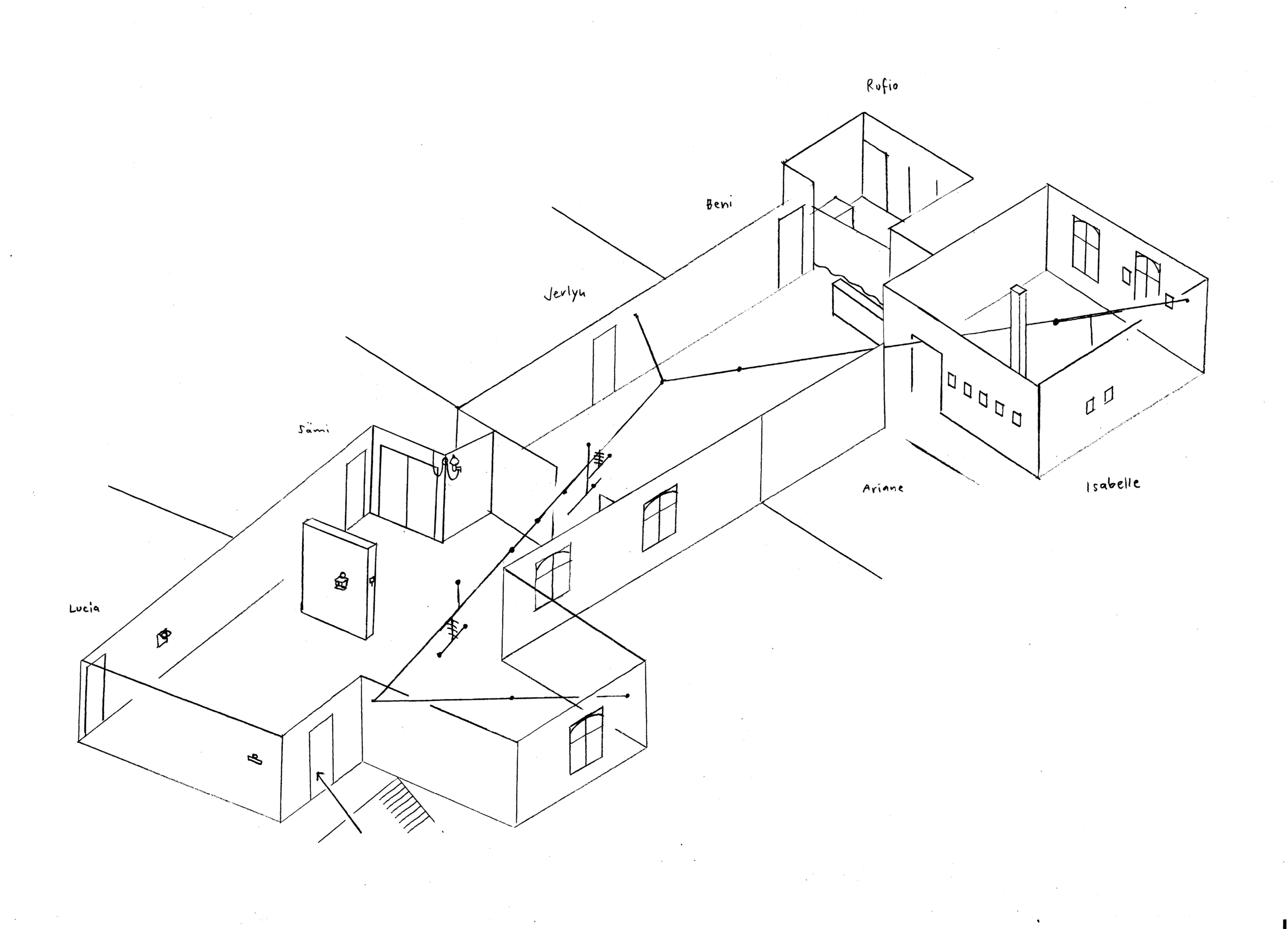
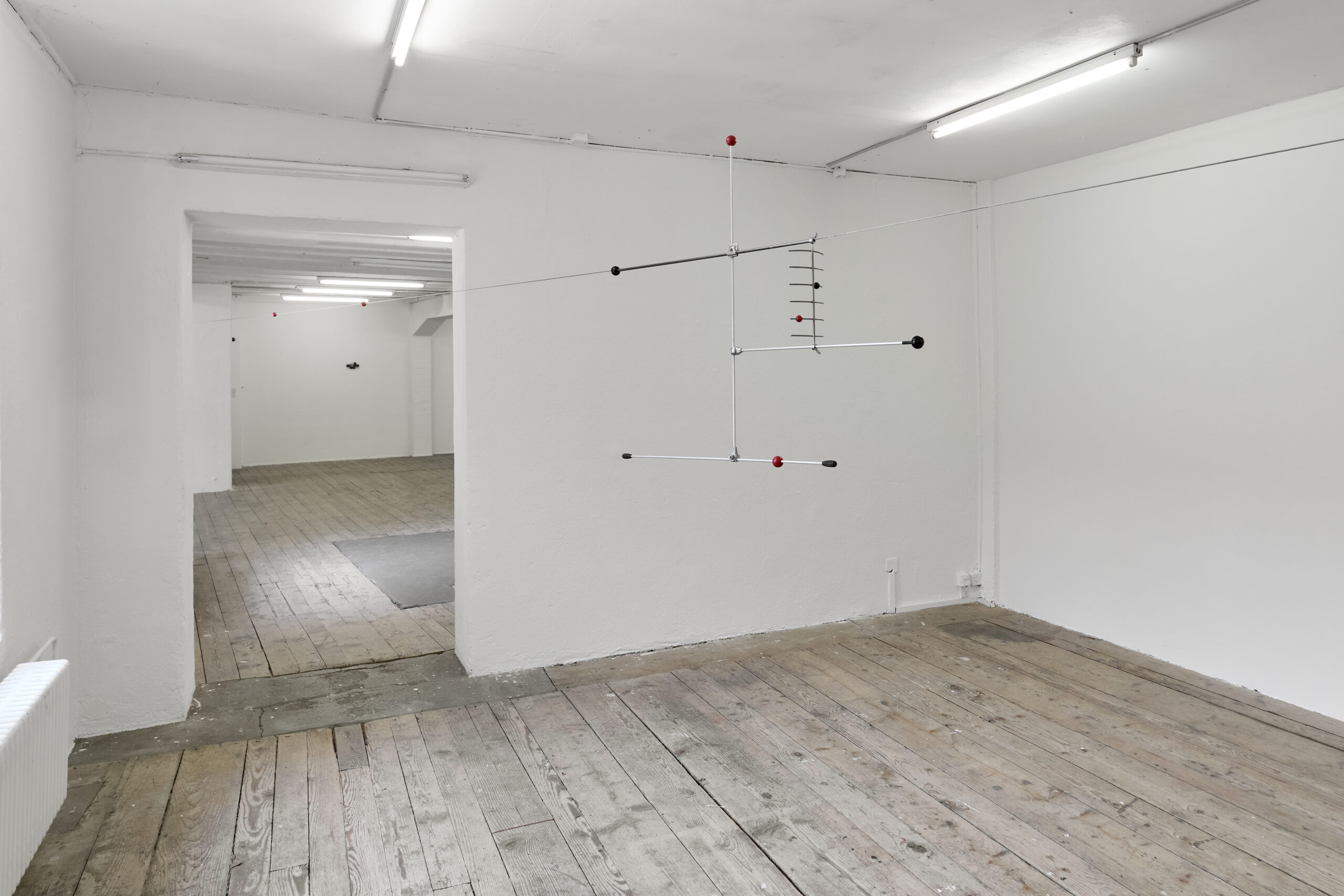
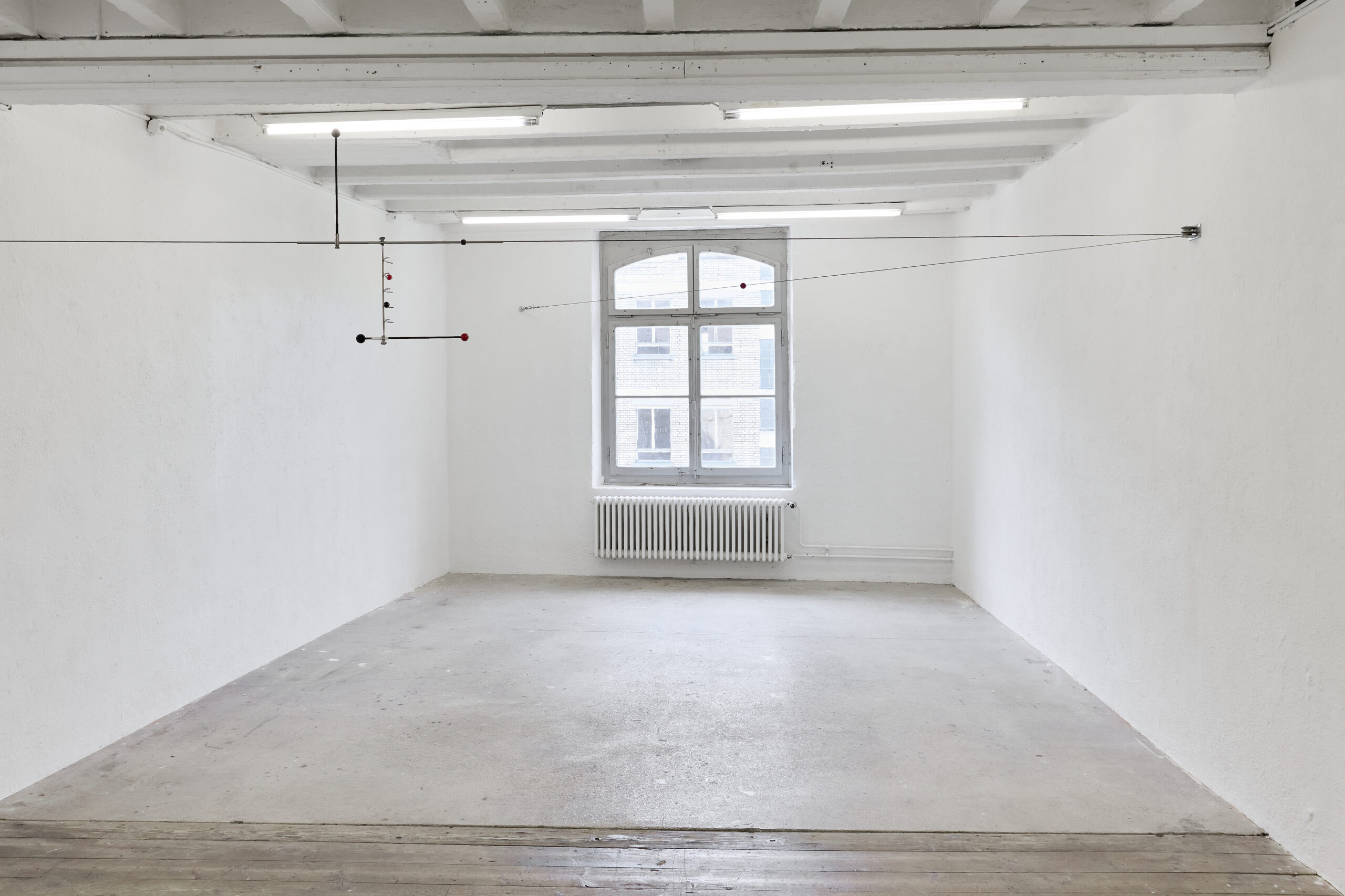
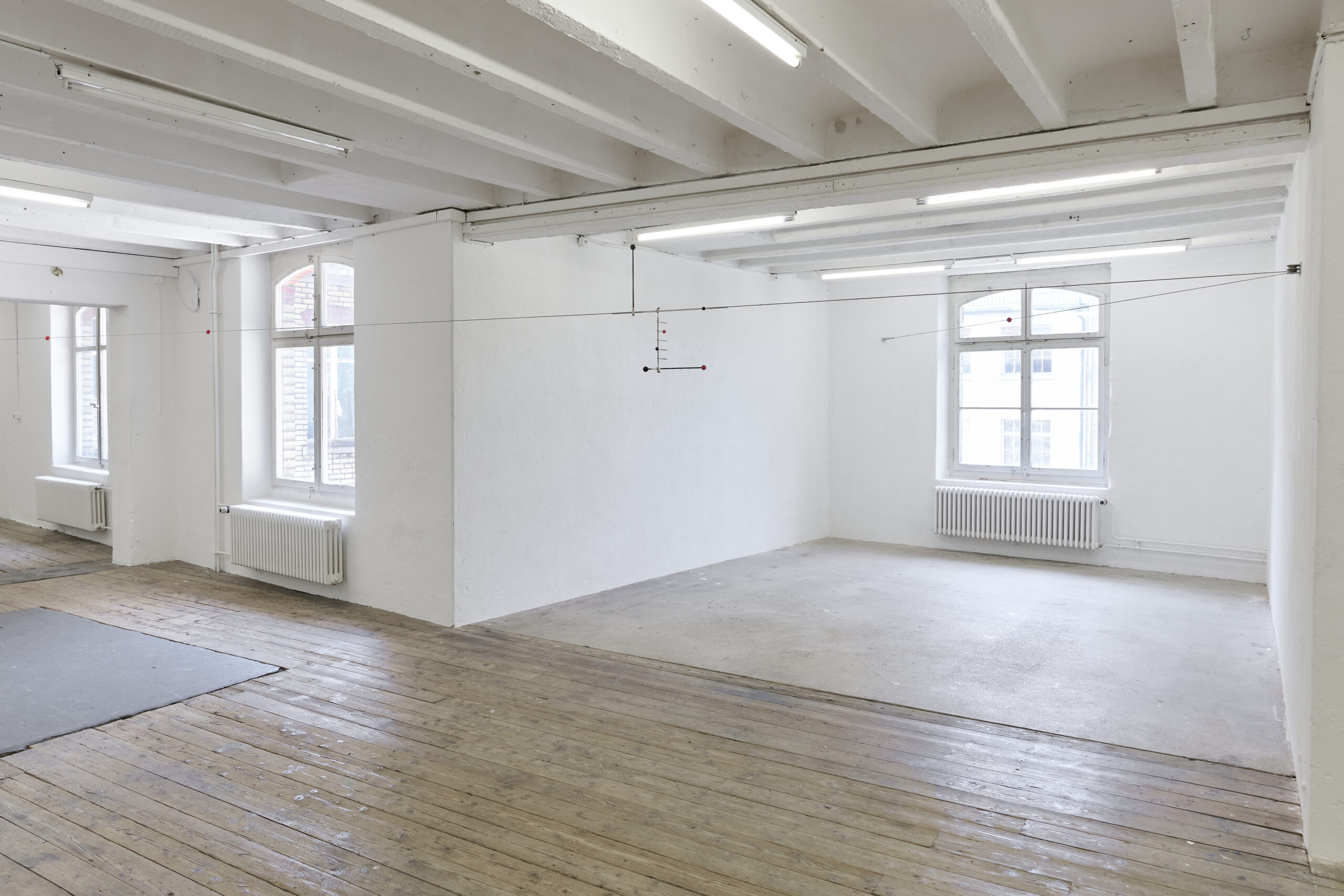
The term ‘spline’ originates from the digital world: a spline curve is a smooth line defined by control points. The spline tool can be used to create gentle rounds, with no resistance or friction. The spline that runs through this space is not immaterial and soft, but a rigid spatial configuration that raises physical questions of structure and tension. As it traverses the entire floor, the work Spline appears like a fragment of a network extending beyond the walls: ‘Auer & Co. Aktiengesellschaft, Supplies for Chemistry and Pharmacy. Glashütten Products’ still adorns the exterior façade of the building, built in 1903.
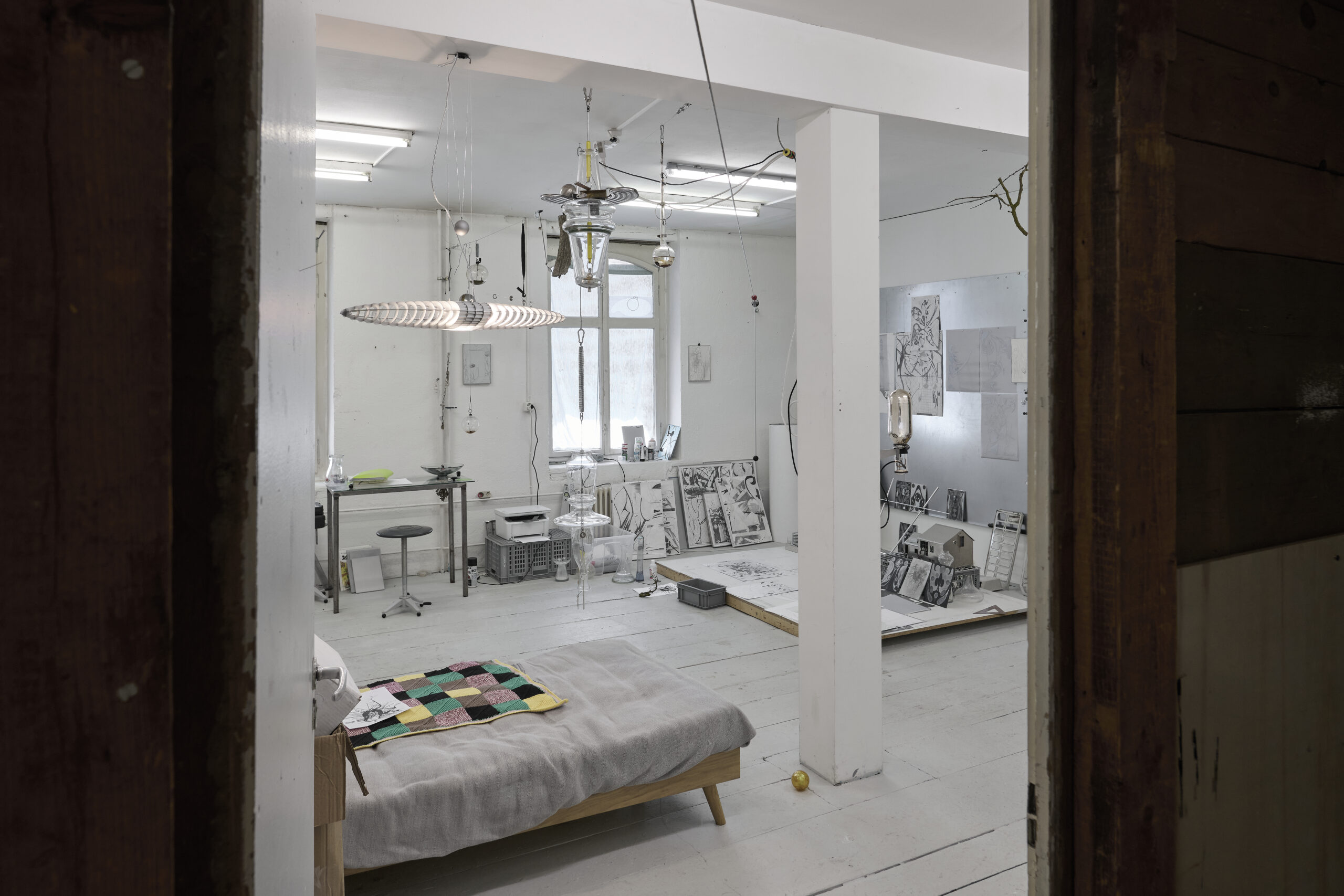
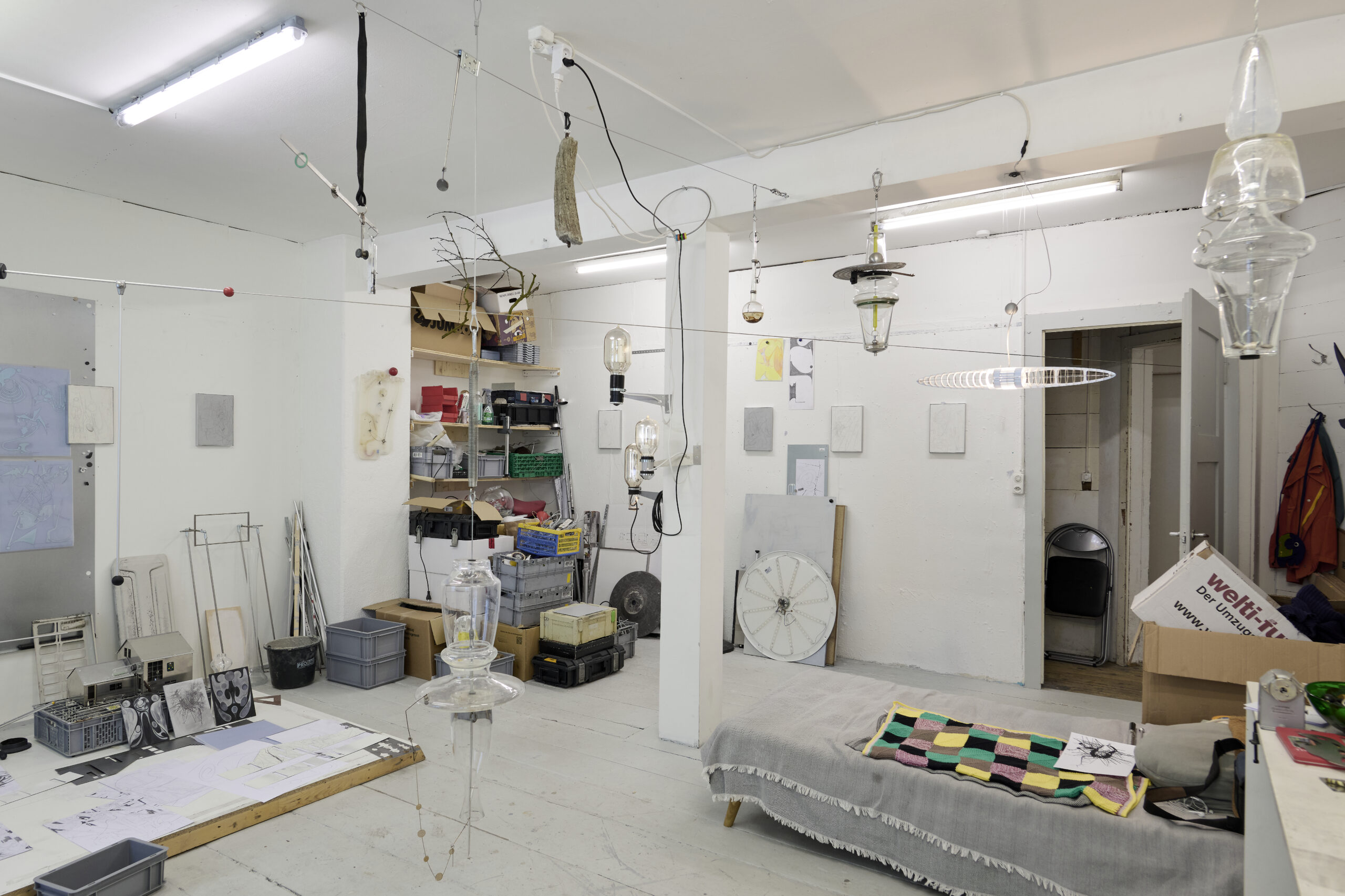
Spline takes us into Mathis Pfäffli’s studio. Here it becomes clear what an assortment of discarded and found objects—including Glashütten Products such as ampoules, measuring cylinders and glass tubes—constitute the components of Pfäffli’s works. Using the material traces of past economies, he constructs an unusual yet coherent formal language: elements interlock, are stacked upon one another, attract each other magnetically, and become new apparatuses without function. When explaining how these connecting gestures come about, Pfäffli often uses onomatopoeic expressions: pffffffh, wrrrrrumm, krrriiiiiii, ffffffffss. These are the sounds of forces such as magnetism or acceleration, and they also describe what is happening: an immediate convergence, which perhaps also explains why the sculptures feel so logical: they seem to have composed themselves through the properties of their materials. Their parts are selected according to aesthetic and material-inherent qualities and joined together where they physically complement one another. This is intuitive artistic work guided by a sense of form.
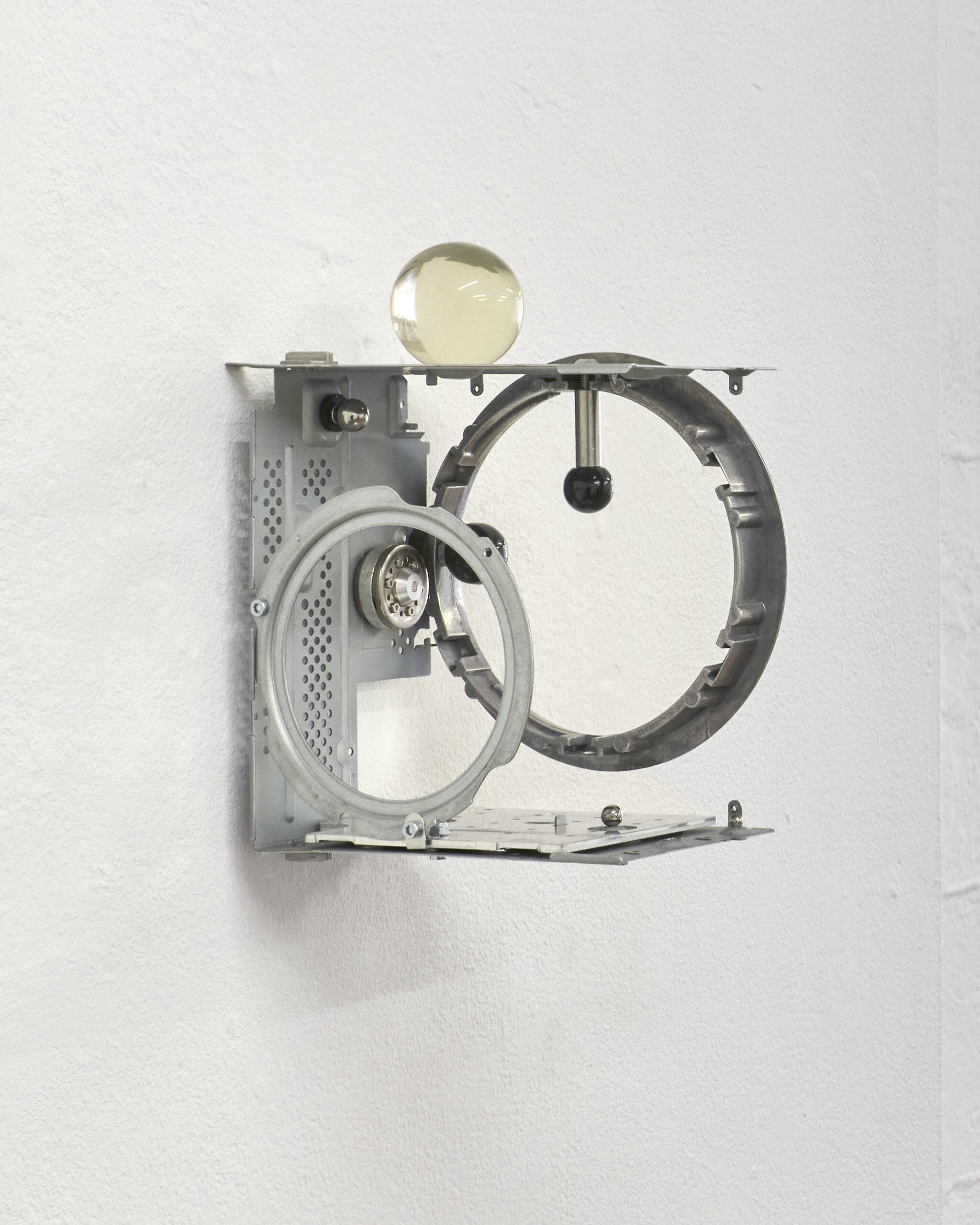
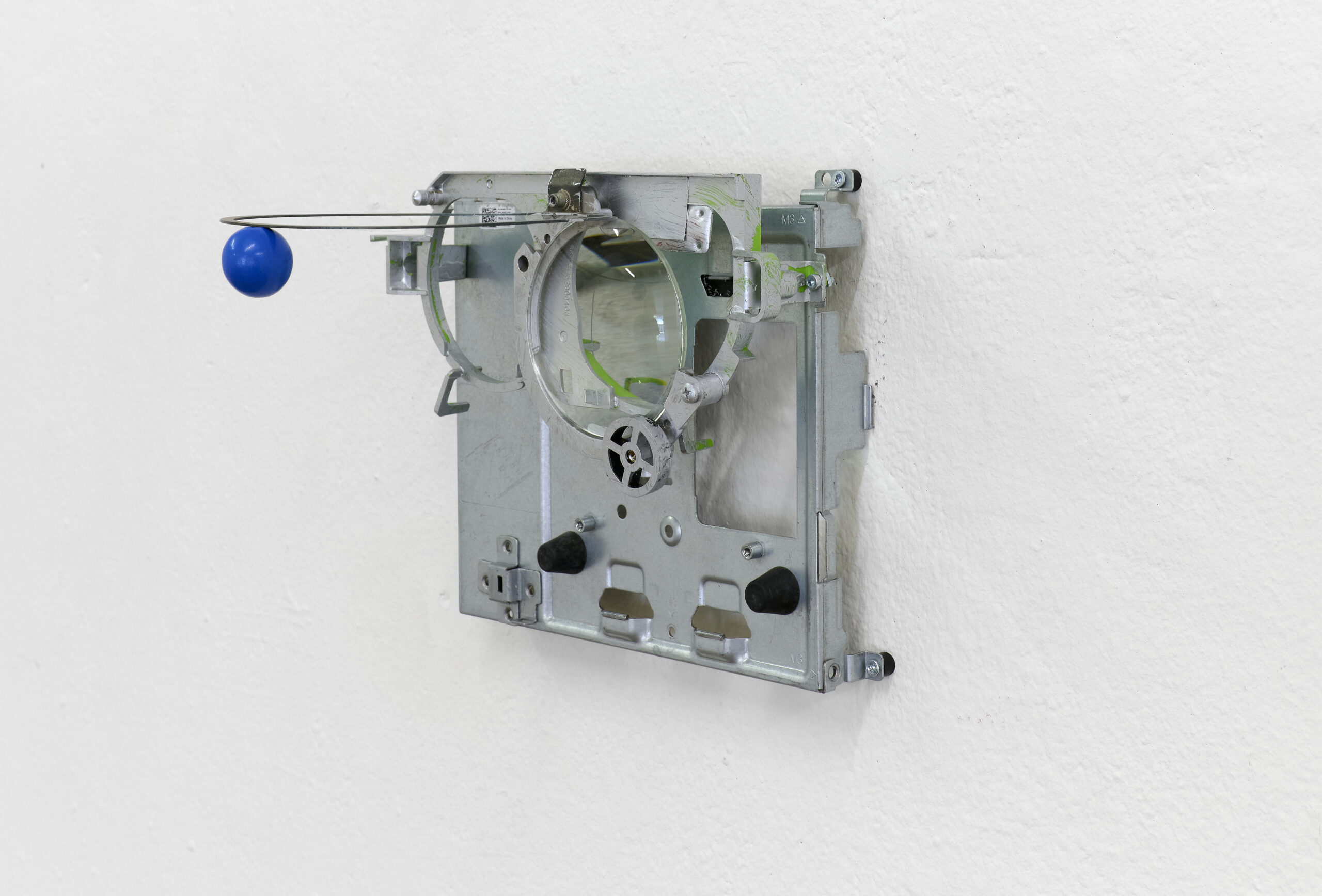
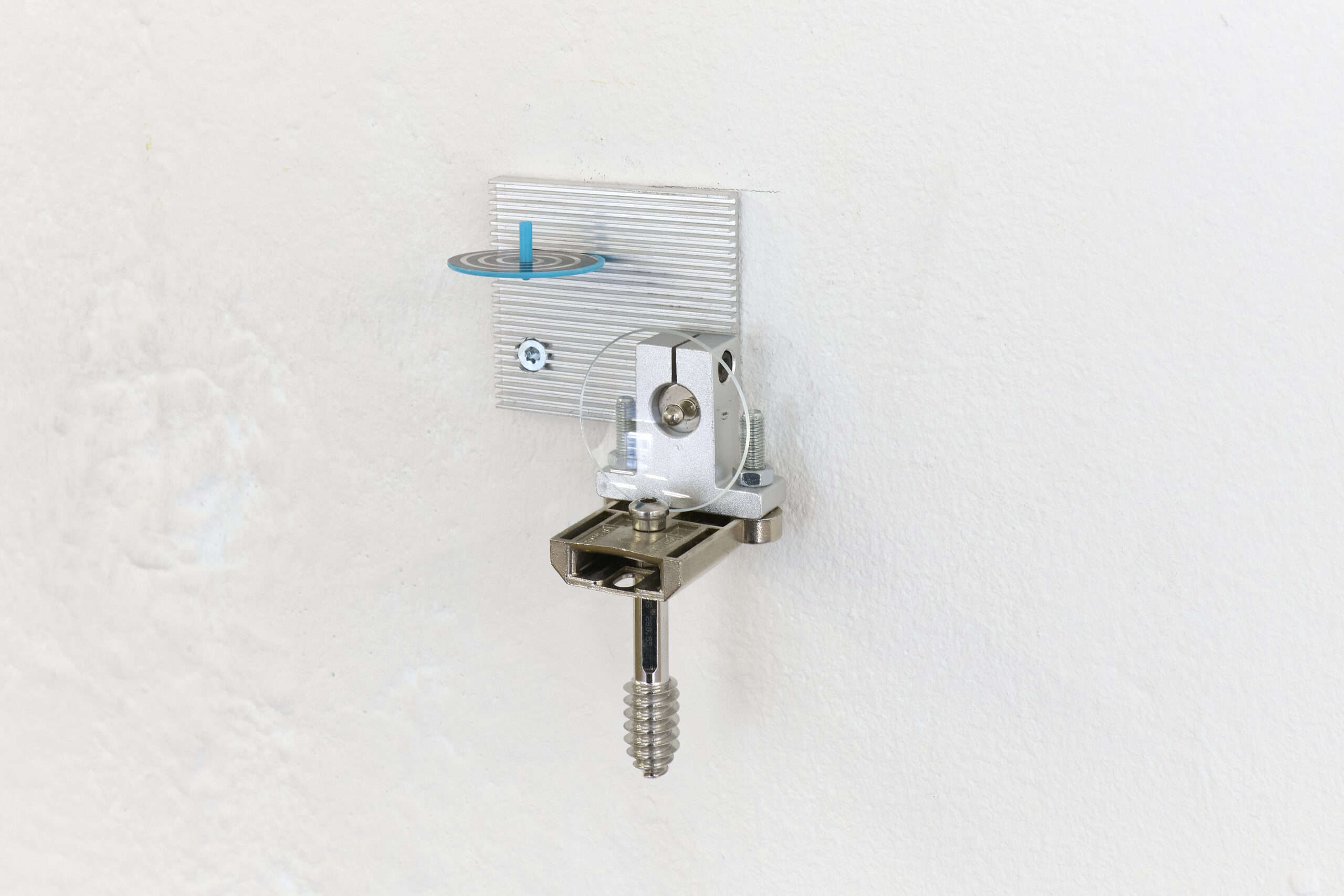
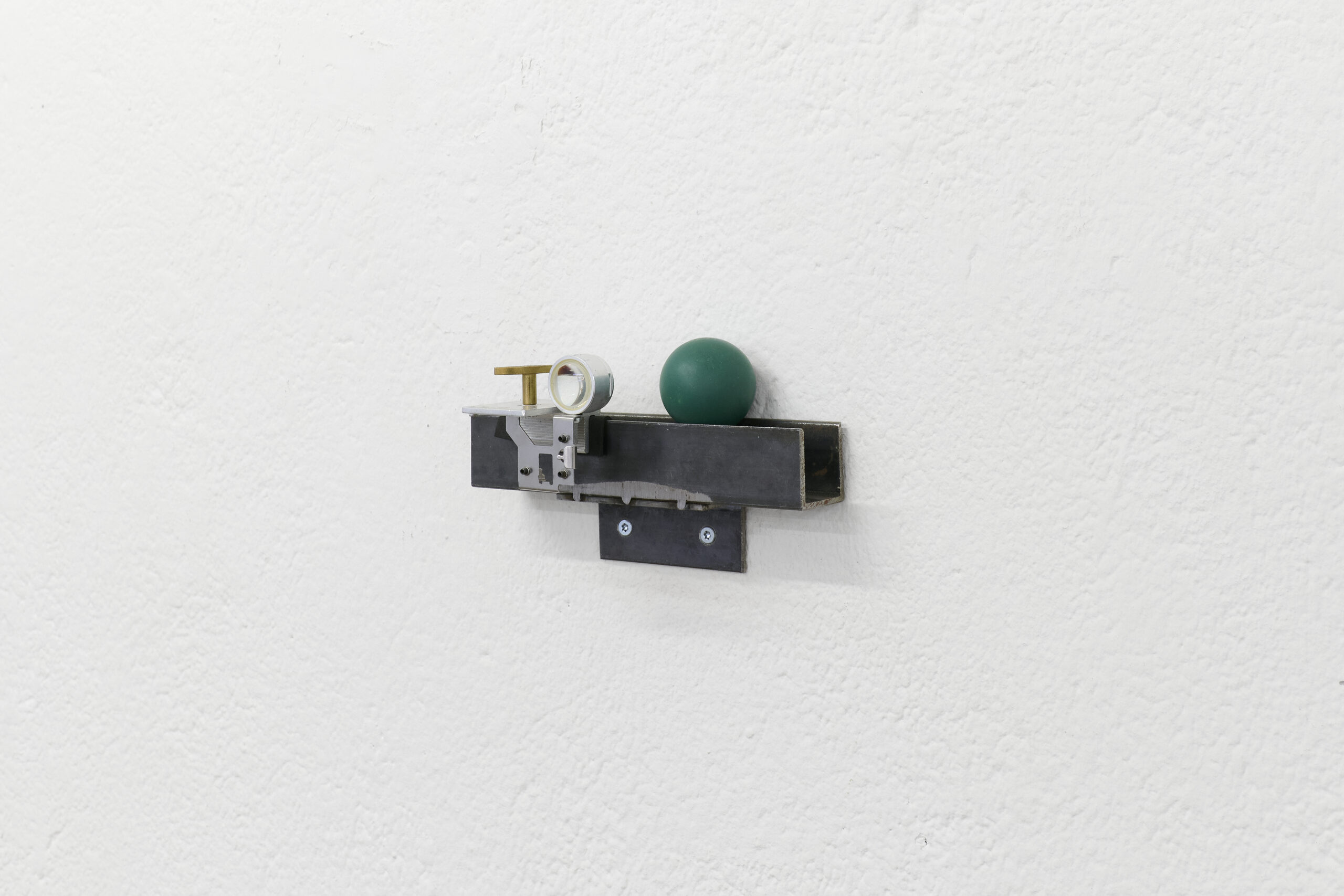
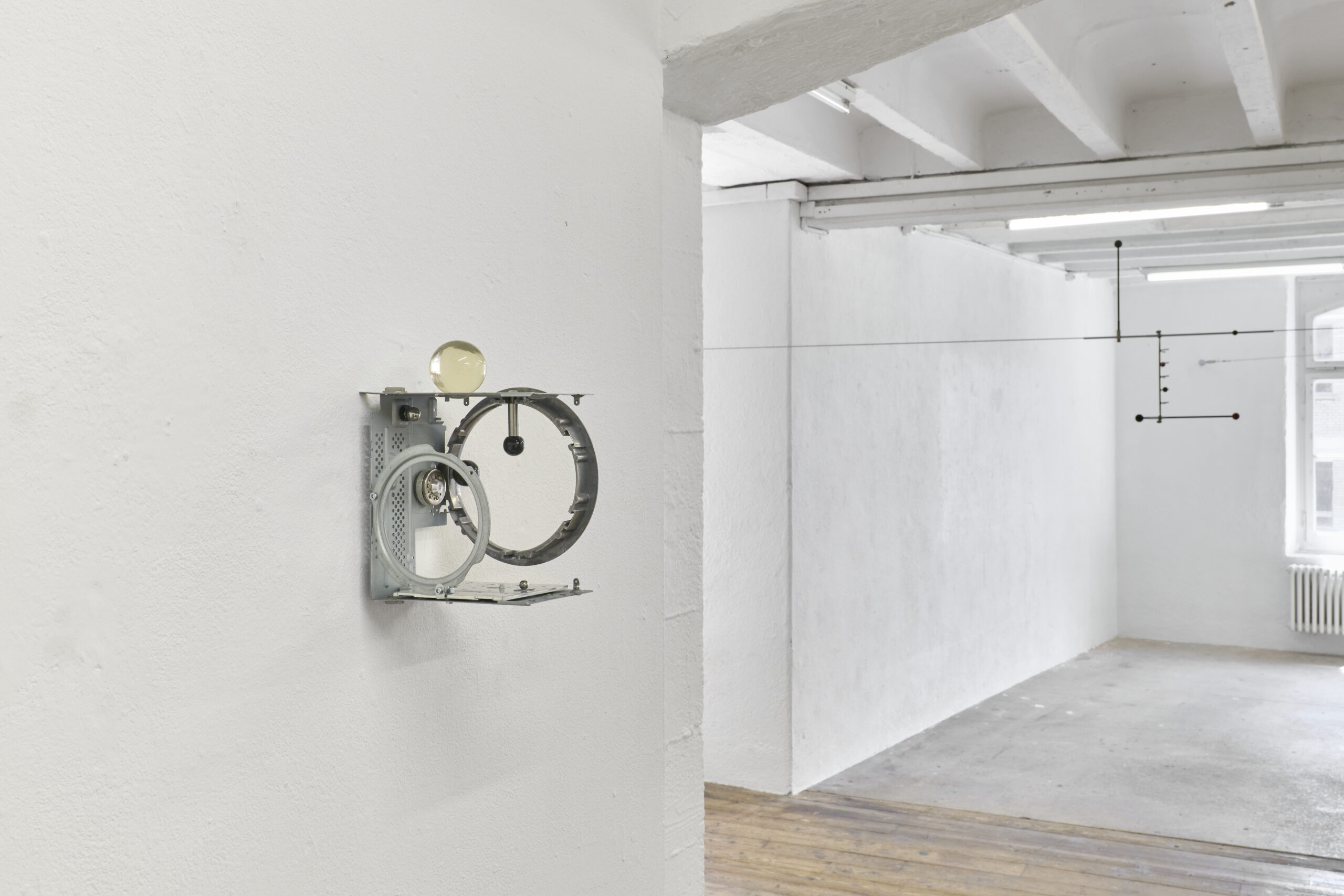
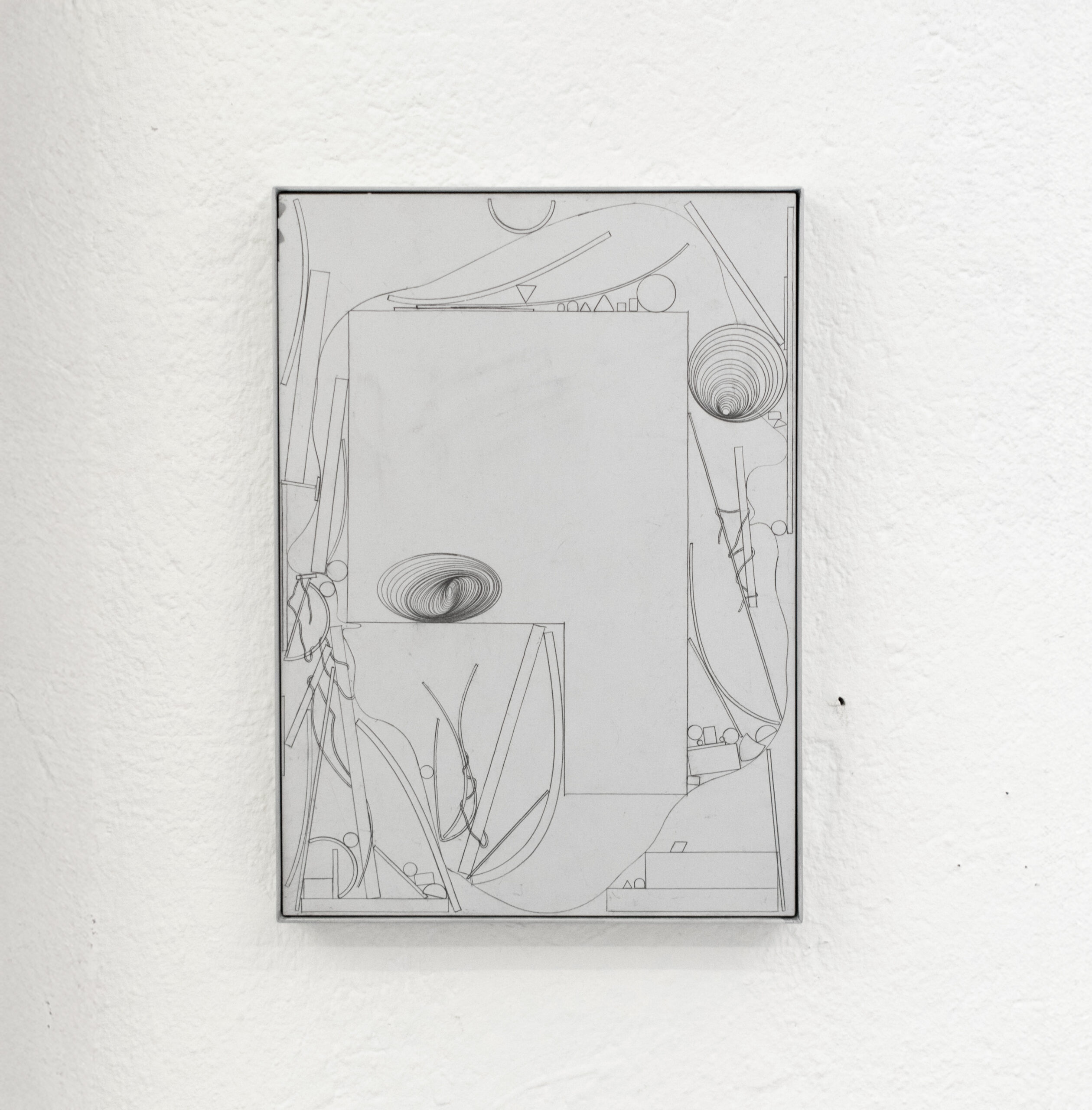
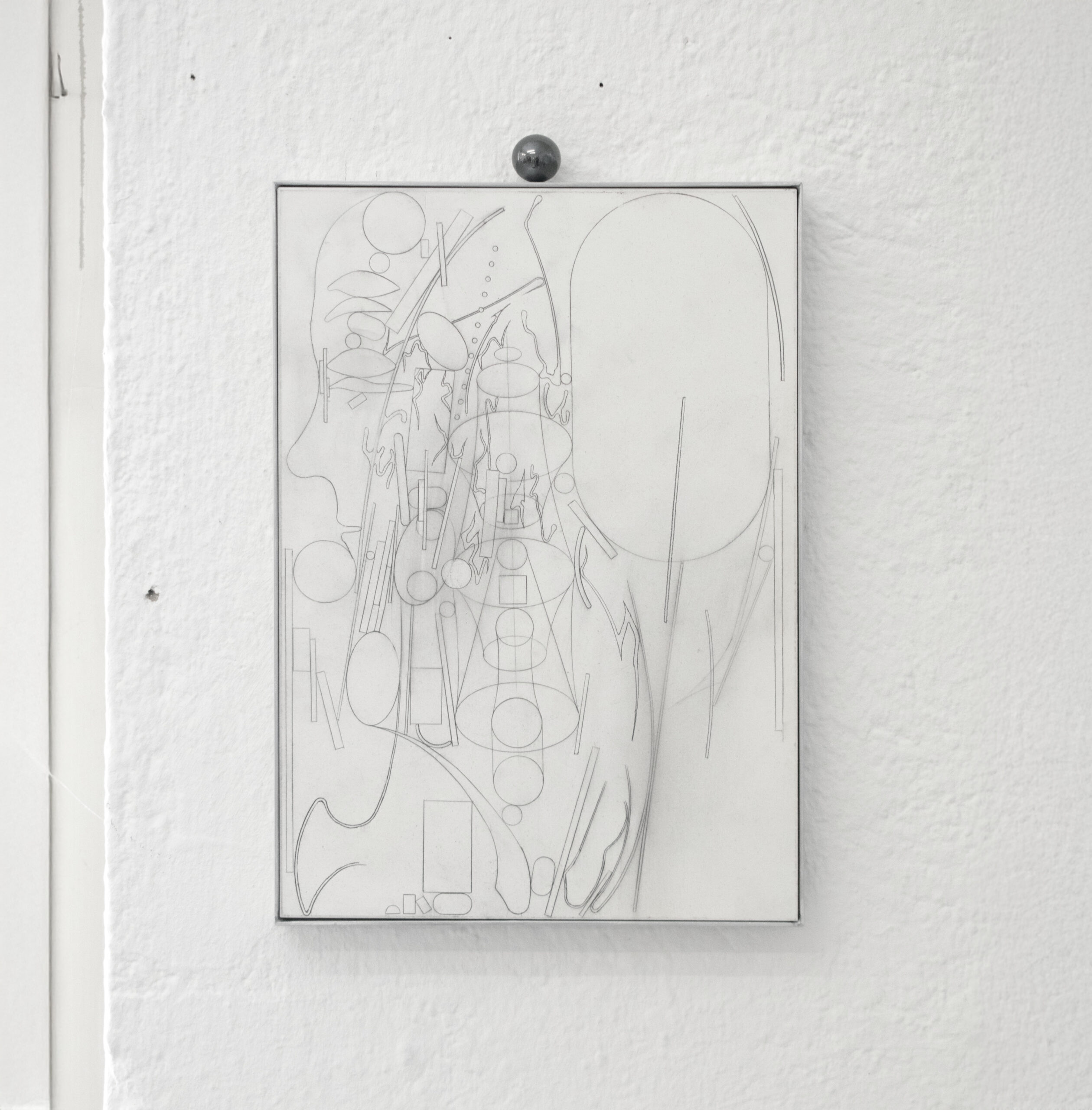
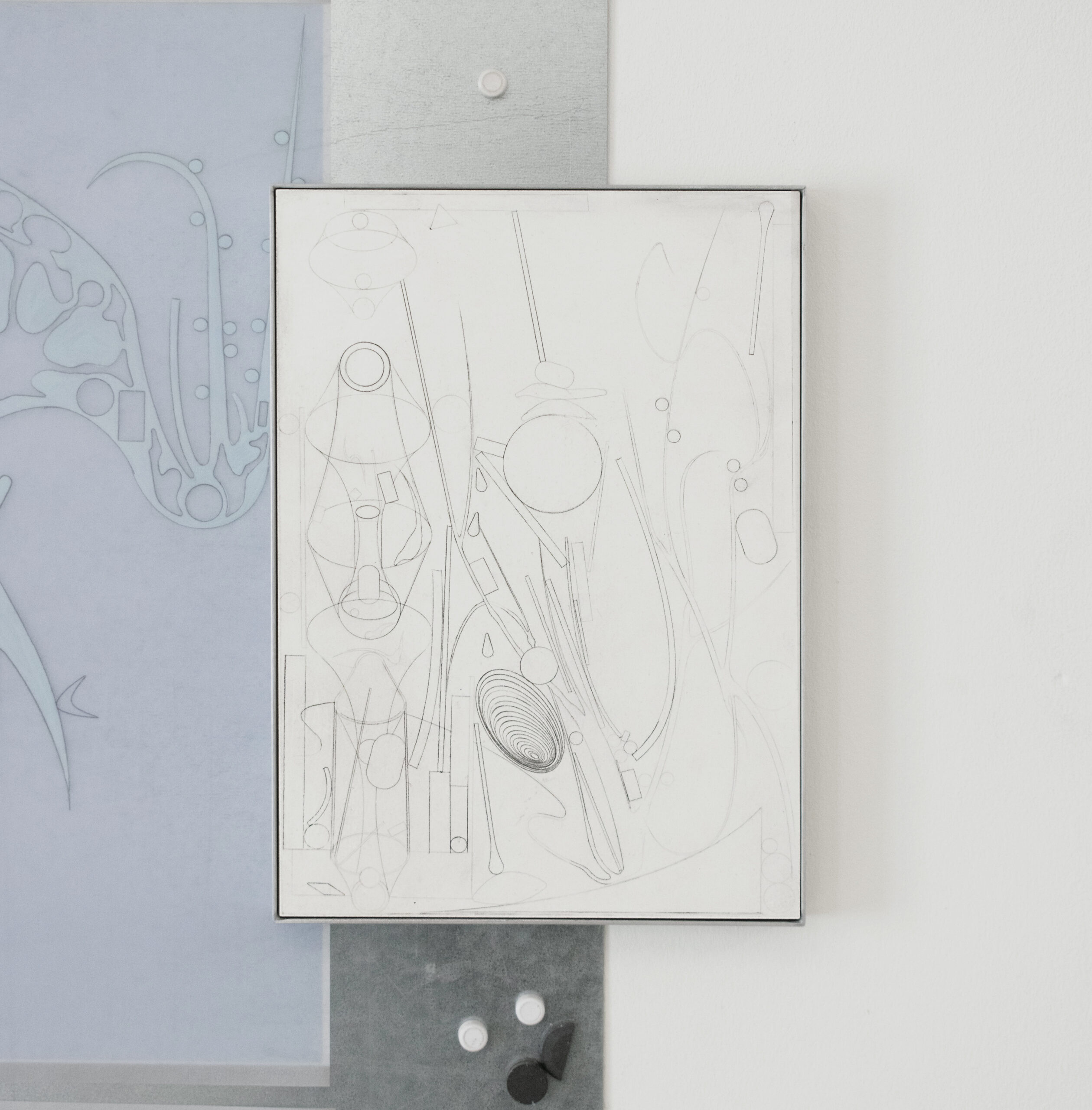
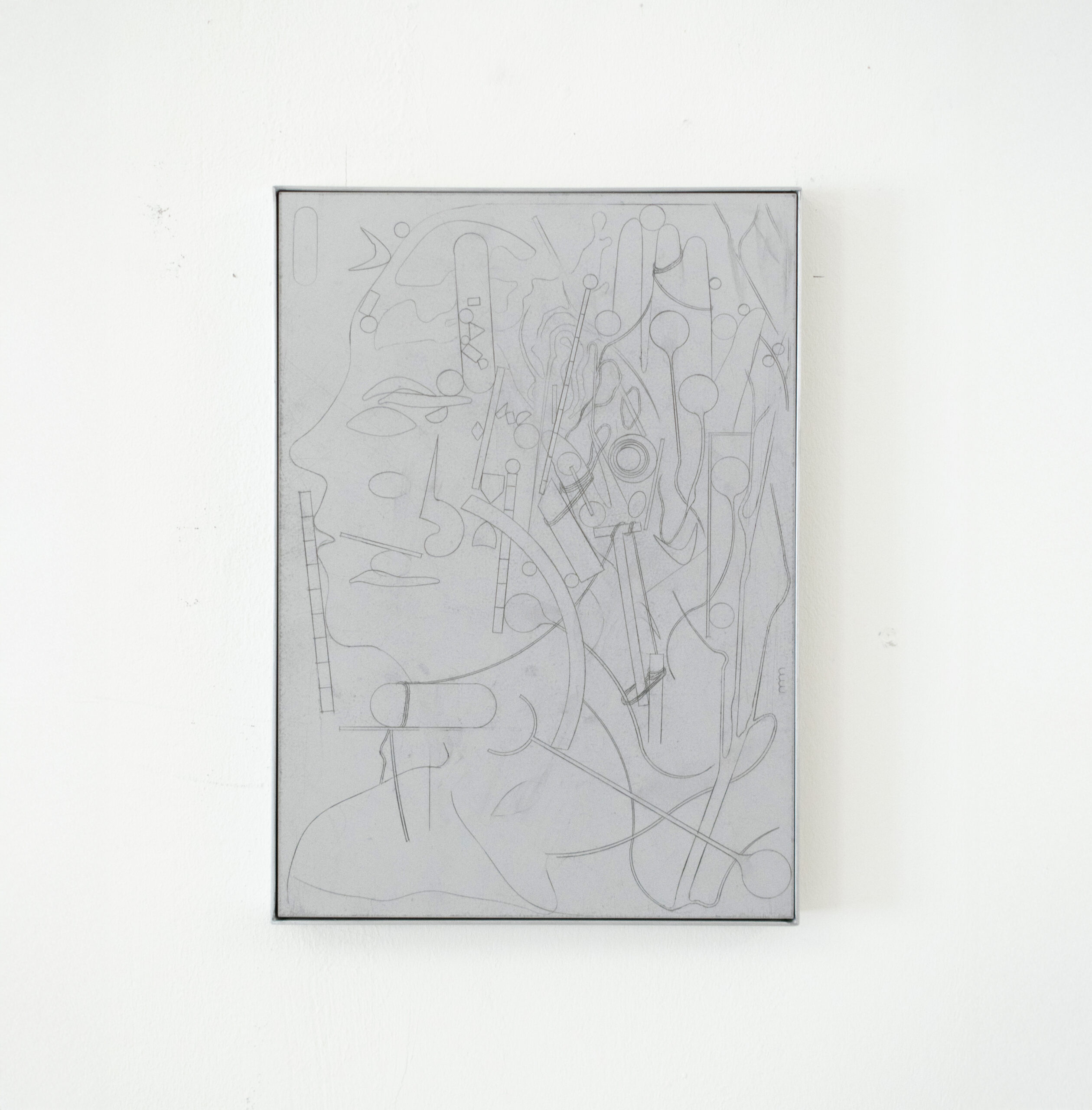
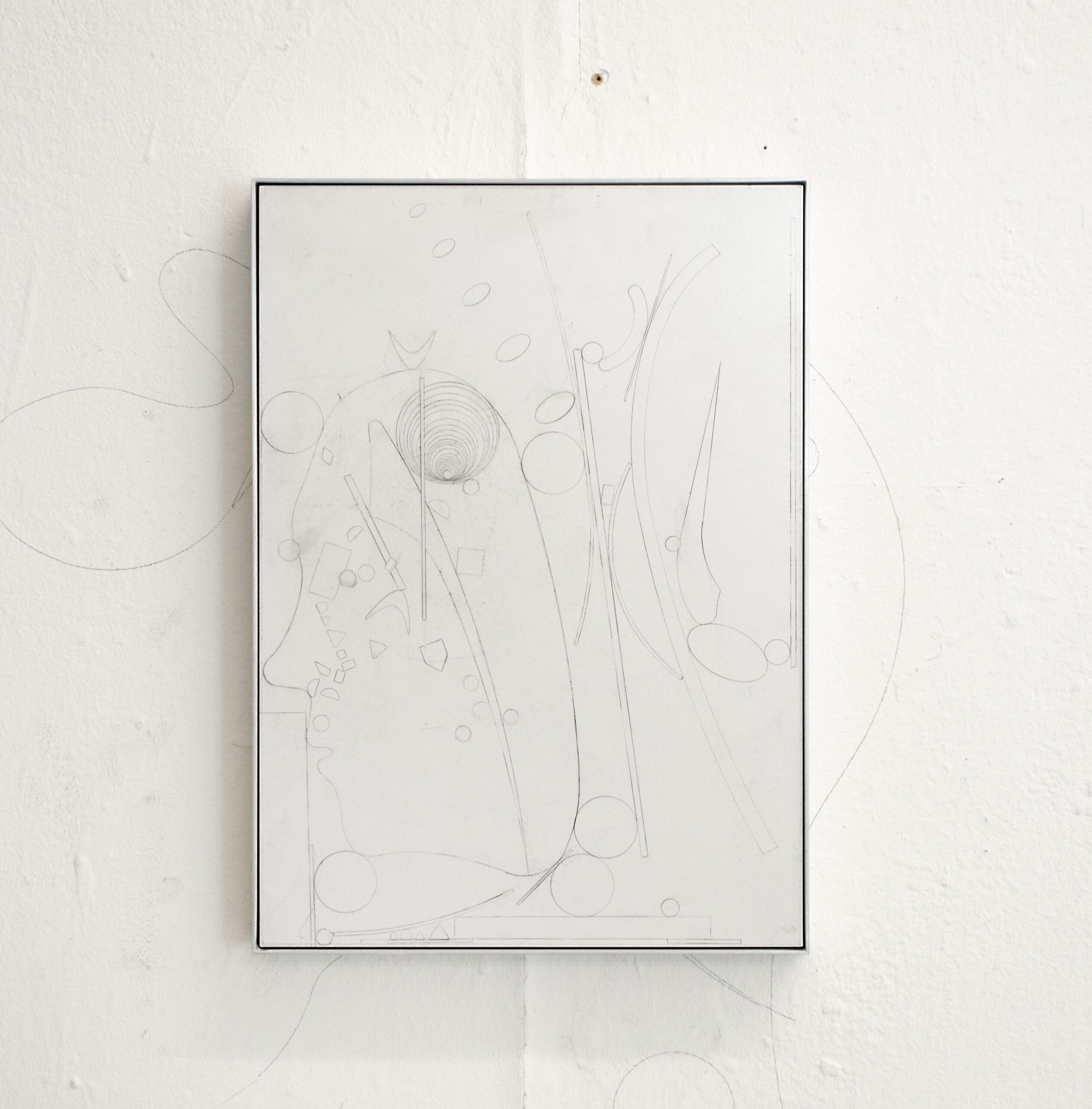
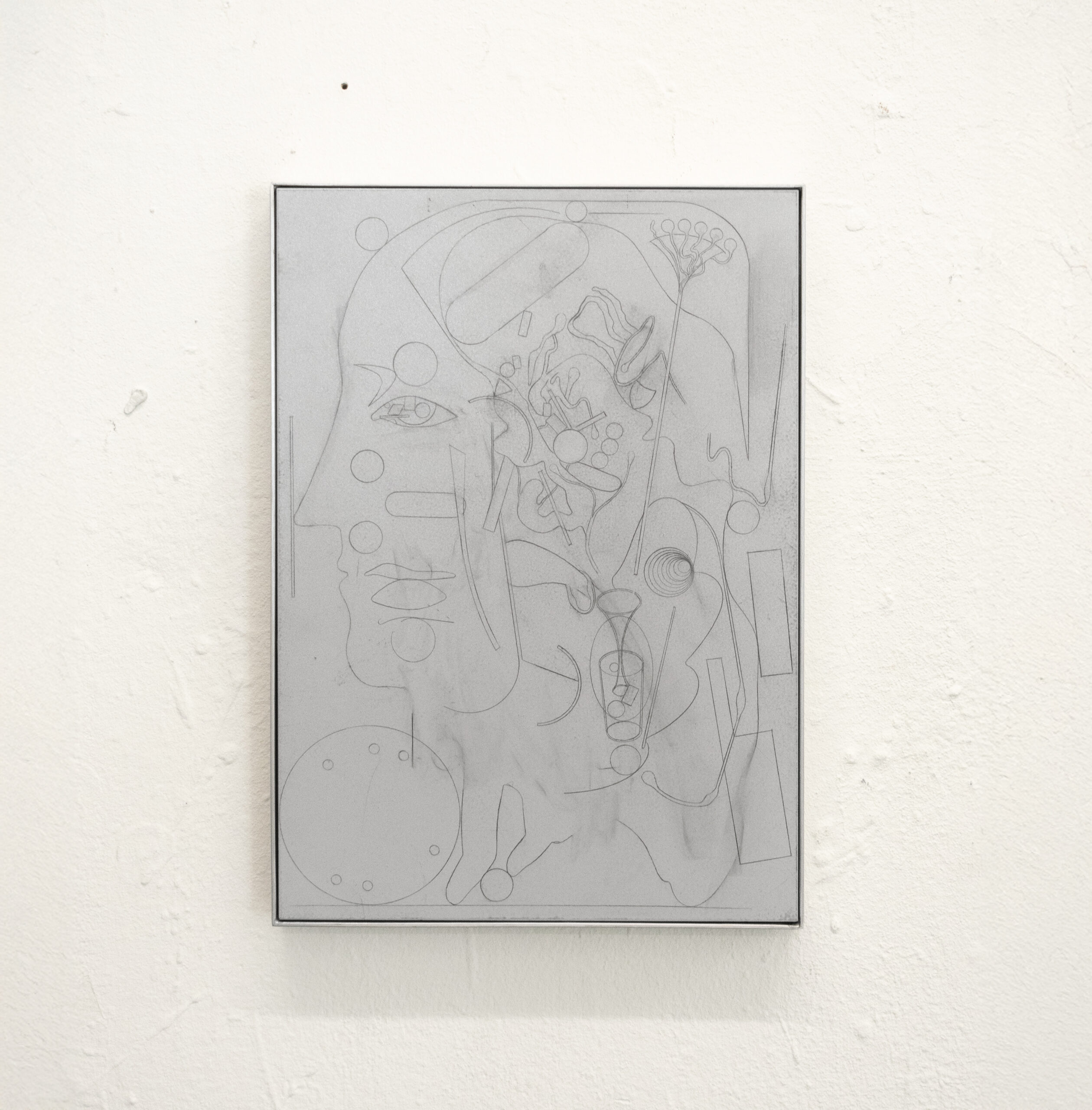
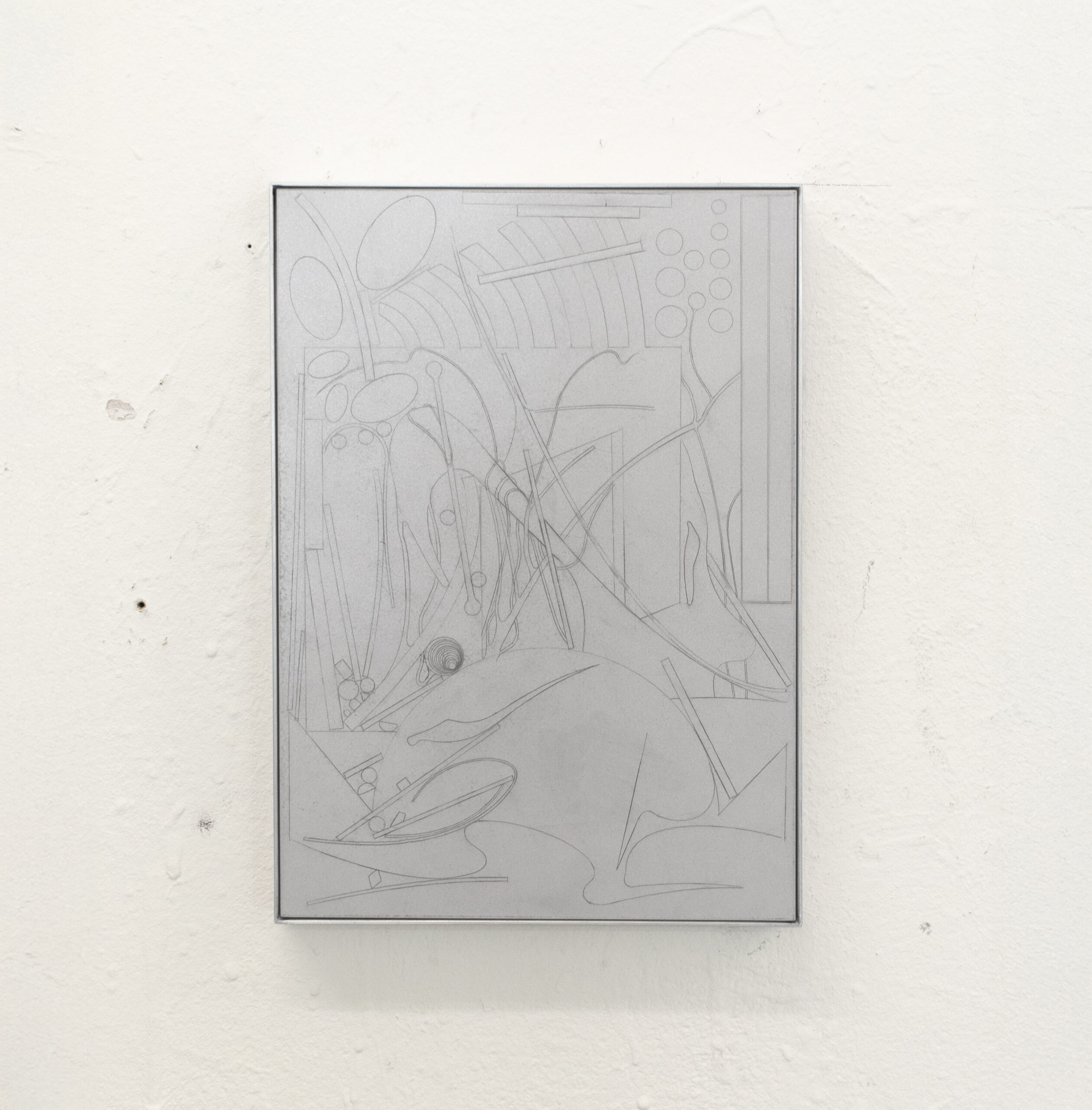
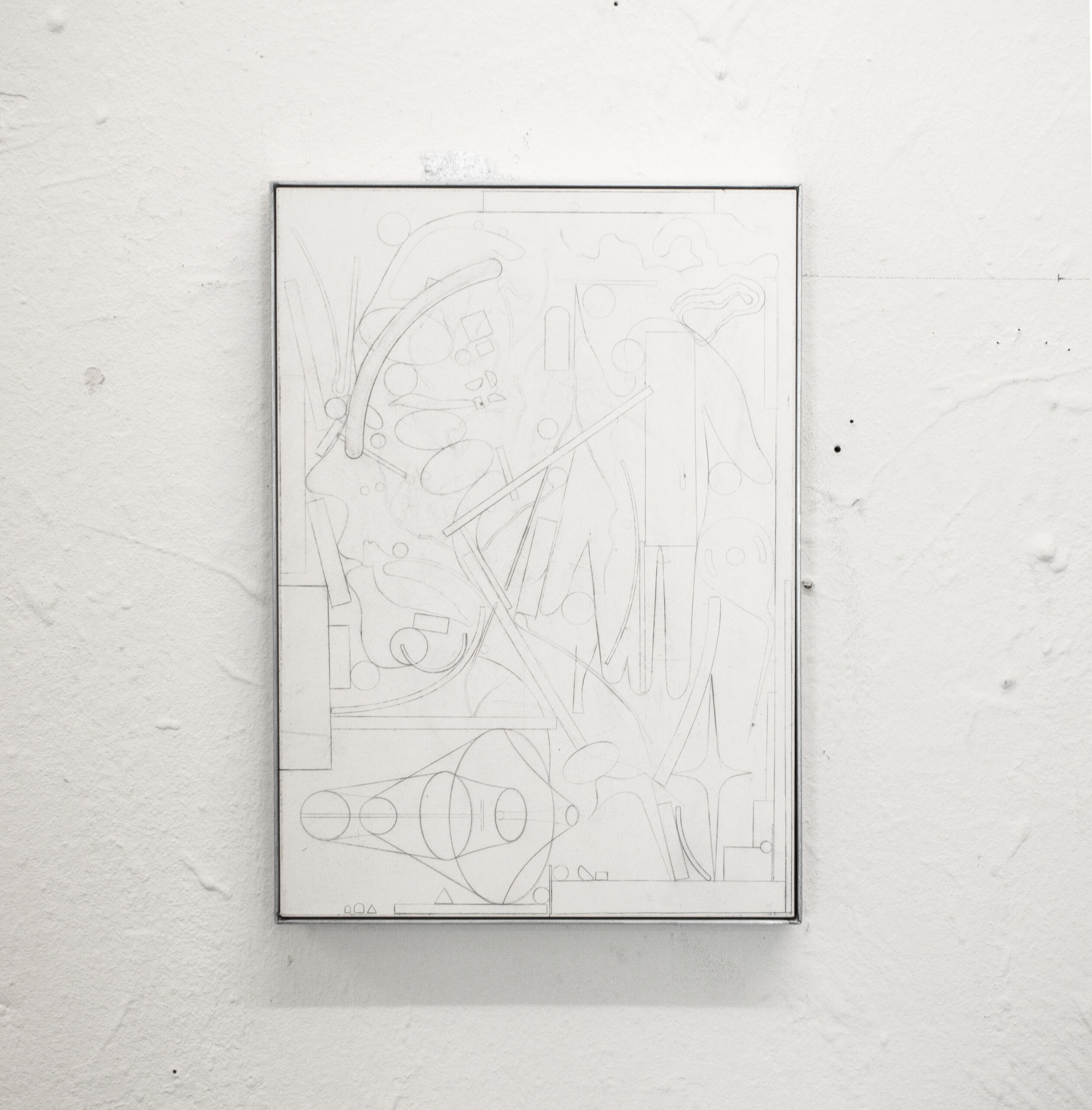
Spline (2026) structures the exhibition space. It is interspersed with sculptural elements that stretch out in different directions like antennas. Red and black spheres strung along the wire rope remind me of the warning markers on high-voltage power lines, hovering far above the ground. The sculptures Wanzen (2025/2026), too, create their own network of axes and connections in their compositions of lenses, spheres and rotators on a single plane. In the studio, drawings from the series Kopfweh (2025/2026) hang in a strict rhythm. Within the pencil lines, plans, diagrams and possibilities emerge within the prototypical profile of a human head. The grey areas of erasures and the stencils used reveal the logic of drafts in the series.
All these works make direct references to systems and networks, technical switches, distribution boards and cables, signals and control mechanisms: parts of infrastructures that usually operate reliably in the background, structuring our lives without drawing attention to themselves. It is in the nature of the network that we never experience it as a whole, but only in fragments: in the hum of the transformer behind the fence, in fuse boxes, during the annual meter reading, in cameras in public spaces. As a totality, it eludes our perception and reveals itself only in protrusions, junctions, transitions and translations.
If I follow this line of thought, the fragments, parts and individual elements in Pfäffli’s works can be read not merely as remnants of a bygone industrial era or a disparate whole, but as concrete forms, themselves broken down into their individual components. It is precisely here that a political dimension emerges, for infrastructure is not neutral: it regulates access to energy, mobility, communication or security and thereby organises the conditions of everyday life. When the artificiality of such systems is brought into view, we understand their constructed nature, and what appears self-evident reveals itself as historically produced, and therefore, in principle, changeable.
– Julia Künzi
Wanze 1-4, 2026;
found materials, Lenses
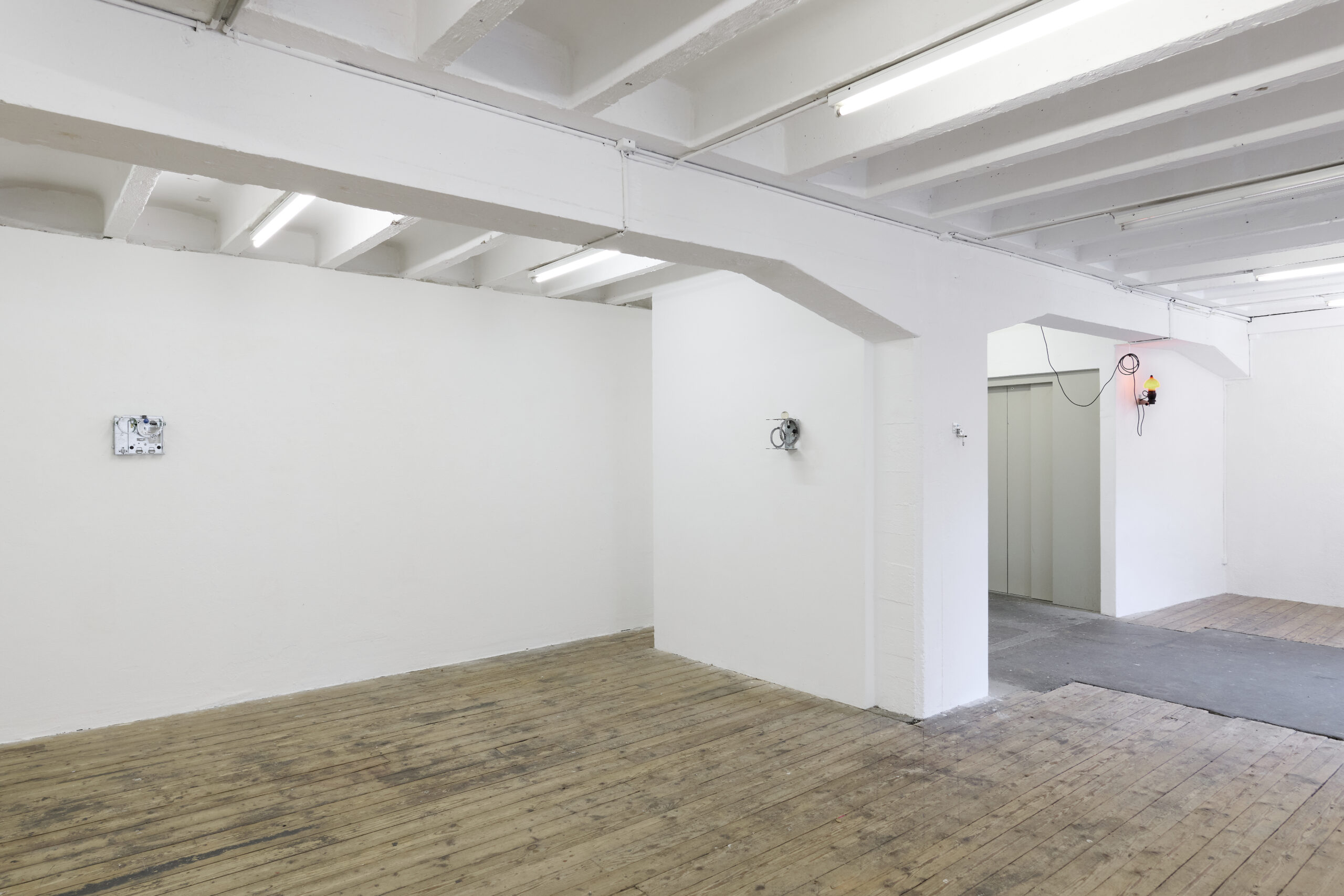
Spline, 2026;
installation, steel rope, found metal sticks and tubes, red and black wood balls, pulleys and hooks.
Kopfweh, 2026;
pencil on coated steel, aluminium frame;
A4
Fotos:
repro Wanzen + installation views: Flavio Karrer